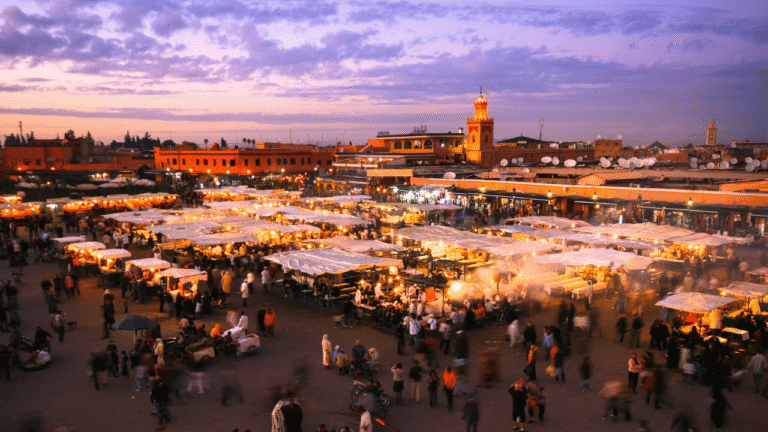
Marrakech is loud, colourful, a little chaotic, and completely worth it. It is also the kind of place that overwhelms people who show up without a plan. This Marrakech travel guide walks you through the basics so your first visit feels exciting rather than stressful.
I have been a few times now, and the trick is simple. Slow down, expect the pace to be different, and do not try to fight the energy of the place. Lean into it and you will love it.
Quick Summary
- Visit in spring or autumn; summer midday heat can pass 40 degrees.
- Stay in a riad inside the medina for the classic experience, or Gueliz for an easier landing.
- Haggling in the souks is normal; start low and stay friendly.
- A comfortable day costs around 60 to 90 euros including a nice riad and good food.
- Dress modestly, carry small change, and agree taxi fares before you get in.
| Best time to visit | Spring and autumn (March to May, September to November) |
|---|---|
| Days needed | 3 to 4 days |
| Daily budget | Around 60 to 90 euros |
| Where to stay | Riad in the medina, or a hotel in Gueliz |
| Currency | Moroccan dirham |
When to visit
Spring and autumn are ideal. March to May and September to November bring warm days and cool evenings, which is perfect for wandering. Summer gets brutally hot, easily above 40 degrees Celsius in July and August, and sightseeing at midday becomes miserable. Winter is mild during the day and genuinely cold at night, so pack a jacket if you come between December and February.
Where to stay
Your first big choice is riad or hotel.
- A riad is a traditional house built around a central courtyard, usually with a small plunge pool and a rooftop. Staying in one inside the medina, the old walled city, is the classic Marrakech experience. Rooms are calm and cool even when the streets outside are buzzing.
- Hotels in the Gueliz district, the newer part of town, feel more western and give you wider streets, normal traffic and easier taxis. Good if you want a gentler landing.
I would stay in a riad for at least part of the trip. Just know that the medina lanes are a maze, so ask your riad to send someone to meet you at the nearest taxi drop point on arrival, because your map app will get confused in there.
The souks, without the stress
The souks are the covered markets, and they are the heart of Marrakech. Spices, lamps, leather, rugs, slippers, everything. They are also where a lot of first timers get flustered.
A few things make it easier.
- Haggling is normal and expected. Start at roughly a third of the first price and settle somewhere in the middle. Stay friendly and smile, it is a social ritual more than a fight.
- If you are not going to buy, do not ask the price, since that opens a negotiation you did not want.
- People will offer to guide you to a square or a workshop. Some are kind, some want a tip or a cut, so a polite no thank you is fine.
- Keep a rough sense of direction using the big landmarks, because the lanes twist and phone maps lag inside the covered sections.
Haggling, quickly
- Start at about a third of the first price and settle in the middle.
- Do not ask the price unless you might actually buy.
- A friendly smile does more than a hard line; it is a social ritual.
- Keep your bearings using the big landmarks, since phone maps lag in the covered lanes.
What to see
- Jemaa el Fnaa is the main square, quiet by day and alive by night with food stalls, musicians and crowds. Eat a bowl of harira soup here and people watch.
- The Bahia Palace is a stunning example of the tilework and carved cedar the region is known for, and it is calm and shaded.
- The Majorelle Garden, once owned by Yves Saint Laurent, is a cool blue and green oasis away from the noise. Book online to skip the queue.
- The Saadian Tombs and the Ben Youssef Madrasa are both beautiful and rarely take more than an hour each.
Food you should try
Moroccan food is one of the best reasons to come. Tagine, the slow cooked stew served in a cone shaped dish, comes in dozens of versions. Couscous is traditionally a Friday meal. Try a chicken tagine with preserved lemon and olives at least once, and finish with mint tea, which is poured from a height and sweeter than you expect.
Street food is cheap and generally safe if the stall is busy. A full sit down meal at a mid range spot runs around ten to eighteen euros a head. Note that many restaurants in the medina do not serve alcohol, so if that matters to you, check first.
What things cost
Marrakech is affordable, but tourist areas charge more.
- A riad room ranges from around 40 euros for a simple one to well over 150 for a fancy one.
- A taxi across town should cost a few euros, but agree the fare before you get in or insist on the meter, since drivers often quote high to visitors.
- A generous daily budget of 60 to 90 euros covers a comfortable trip with a nice room, good food and a few paid sights.
Check current prices before booking, as they shift with the season.
Staying comfortable and respectful
Dress on the modest side, especially away from the pools and tourist cafes. Covered shoulders and knees keep you comfortable and blend in. Ask before photographing people, particularly performers and stall holders, since some will expect a small tip and others simply prefer not to be photographed.
Carry small change for tips and taxis. Keep your valuables close in crowds. And drink bottled water to be safe.
How long to stay
Three days is enough for the main sights, the souks and a proper meal or two. A fourth day lets you take a trip out to the Atlas Mountains or the Agafay desert, both easy half day or full day options that give you a total change of scenery. Any less than three days and you will feel rushed, since Marrakech asks you to move at its own speed.
Come with an open mind and a bit of patience, and the city gives back tenfold.
Good to know
Dress on the modest side away from the pools, ask before photographing people, and drink bottled water.